All articles
Quality · 3 min read
Design Verification Process
Ensuring product designs meet all requirements and perform as expected — Renon Power's structured approach to validating storage hardware before it ships.
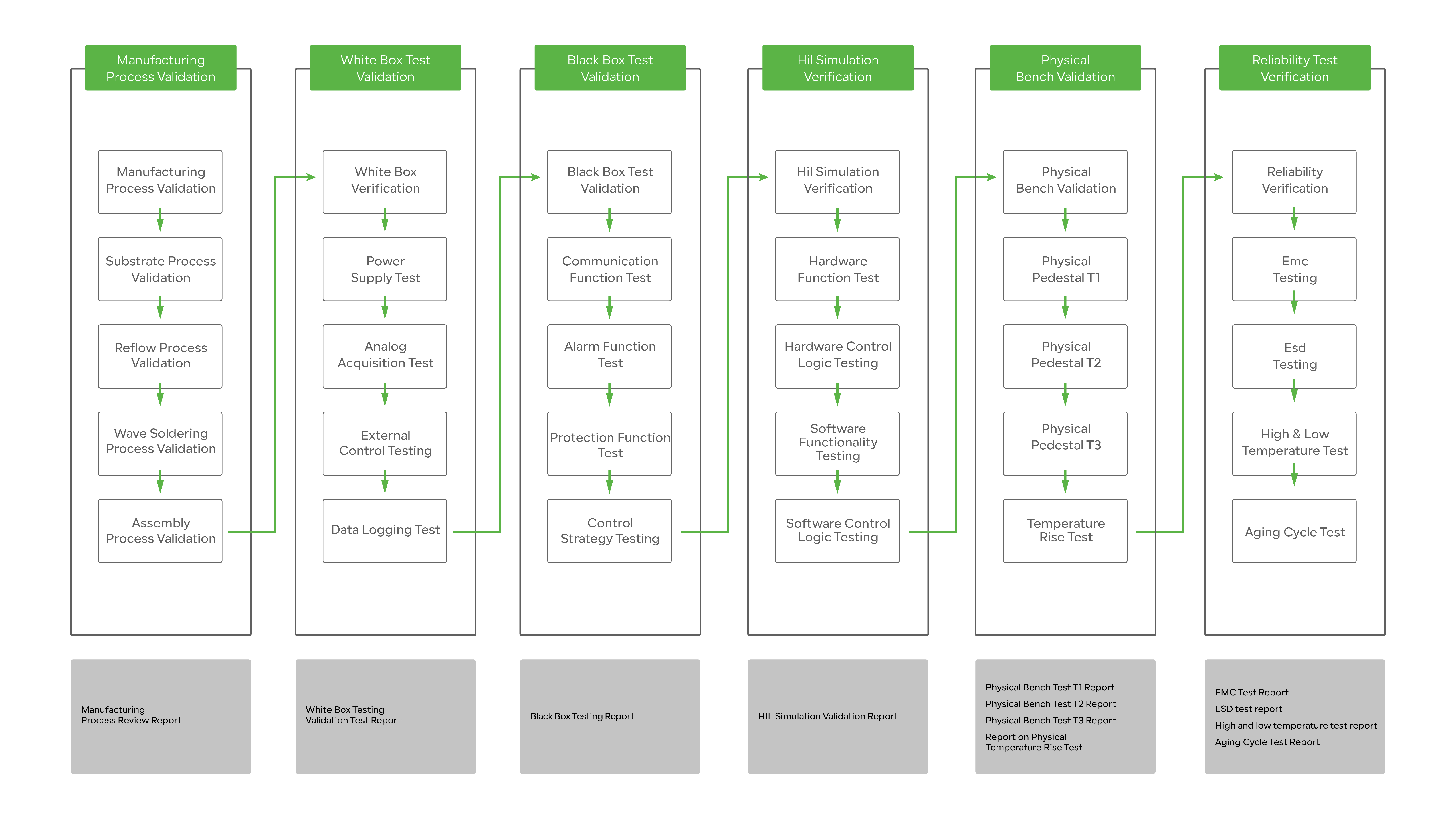
Design verification confirms that a finished product design meets every functional, safety, and performance requirement defined at the start of development. For energy storage hardware that lives in homes, businesses, and the grid for 10–15+ years, this process is non-negotiable.
What Design Verification Covers
- Electrical performance — capacity, round-trip efficiency, charge/discharge rates across the operating temperature range.
- Thermal behavior — verifying thermal management performs to spec under worst-case ambient conditions.
- Safety and abuse testing — short circuit, overcharge, overdischarge, mechanical shock, and propagation containment.
- Communications and controls — BMS, inverter handshakes, EMS dispatch, fault response, and firmware update paths.
- Compliance — UL 1973, UL 9540, UL 9540A, IEC 62619, UN 38.3, and applicable grid interconnection standards.
Why It Matters for Installers and Owners
A documented design verification record gives installers, AHJs, and asset owners confidence that the product behaves the same way in the field as it did in the lab. It is the foundation for warranty claims, financing, and grid interconnection approval.
Original source
View on Renon Power